
 Australia site →
 Global tax-deductible giving →
Distribution evaluation
Malaria Consortium conducts extensive monitoring to determine what proportion of children targeted by their SMC programs receive treatments.
Malaria Consortium delivers programs that protect the poorest and most marginalized children in Africa and Asia from a range of deadly diseases, including malaria and pneumonia. The Seasonal Malaria Chemoprevention (SMC) project is an extremely cost-effective and evidence-based approach to protect children under 5 from malaria.
Their annual demonstrated impact includes:
Donations are tax-deductible in the country selected. See our global tax-deductibility options.
By Card, Bank Transfer or Paypal
By Check, ACH, Zelle, Crypto, etc.
Malaria, though almost nonexistent in affluent countries, is pervasive in low income countries in tropical and subtropical regions. It takes an enormous toll on individuals, families, and national economies. When a family member contracts malaria, it not only threatens that person’s health, but their family — usually already poverty stricken — can fall further into destitution. This is due to a range of factors, such as navigating the logistics and expense of seeking treatment, losing education or wages from missing school or work, and burial expenses for deaths.
Such direct costs have been estimated to be over $12 billion per year worldwide. [1] Communities and nations sustain even greater costs from lost productivity and the drain on medical systems.
A child dies from malaria every two minutes.
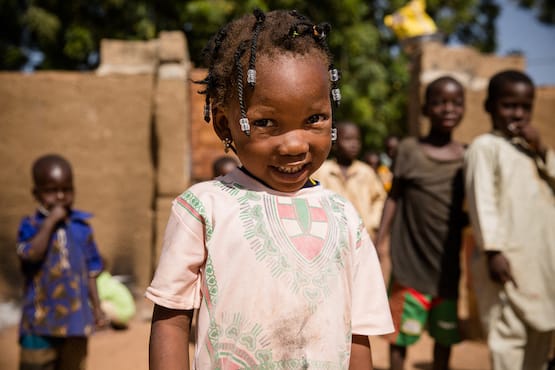
It’s no wonder that the Centers for Disease Control and Prevention characterizes malaria as “one of the most severe public health problems worldwide.” [2] The World Health Organization (WHO) estimates that there were 219 million cases of malaria and more than 608,000 deaths globally in 2022 [3], with over 90% of those in Africa. Pregnant women and children under the age of 5 are especially vulnerable: a child dies from malaria every two minutes. [4]
Since 2012, the WHO has recommended SMC for children ages 3 months to 5 years living in areas of high seasonal malaria transmission in the Sahel subregion of Africa: it has been proven to reduce approximately 75% of all malaria episodes and 75% of severe malaria cases. When children do not contract malaria, their own health is protected and the transmission pool is reduced, which helps the whole community. [5]
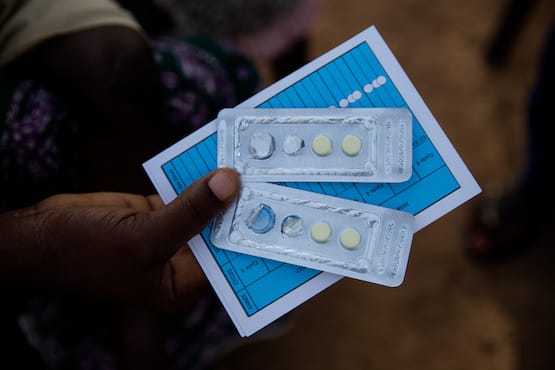
SMC consists of four monthly prophylactic treatments of amodiaquine (AQ) plus sulfadoxine-pyrimethamine (SP) during the period of greatest risk, which typically coincides with a region’s rainy season. The tablets easily dissolve with water. Both SP and AQ are given to the child by a trained community distributor. The child’s caregiver is then instructed to give the child two remaining doses of AQ daily in the following two days.
SMC has been proven to reduce approximately 75% of all malaria cases.
Malaria Consortium is a global leader in SMC. They support a wide range of elements required for a successful SMC program, including:
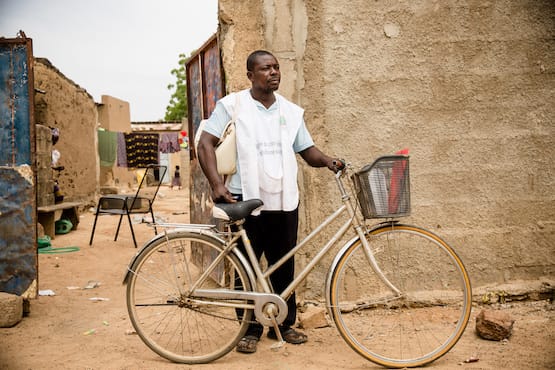
Malaria Consortium collaborates with communities, governments, academic institutions, and local and international organizations to build localized expertise and sustainability: 95% of staff work in malaria-endemic areas. Their health workers and community distributors deliver SMC treatments, primarily door-to-door. This approach that has been shown to achieve optimal coverage.
Malaria Consortium also conducts coverage surveys, tracks changes in malaria incidence and deaths, and monitors drug resistance — evidence that’s useful in influencing governments and motivating greater demand for and production of accessible, affordable, quality SMC drugs.
From 2015–2017, Malaria Consortium was the primary recipient and implementer of Unitaid’s $68 million ACCESS-SMC project. Unitaid notes that the ACCESS-SMC project supported National Malaria Control and Elimination Programs in seven countries, “fulfilling more than 25% of the region’s need, while monitoring the safety, efficacy, cost, and public health impact of seasonal malaria chemoprevention at scale.” [6]
In 2017, 15.7 million children in 12 countries in Africa’s Sahel subregion were protected through SMC programs — three of those countries were protected through the work of Malaria Consortium. However, an estimated 14–16 million children who could have benefited from this intervention could not be reached, mainly due to a lack of funding. [7]
Since 2017, Malaria Consortium has continued to implement SMC, largely using philanthropic directed funding from Good Ventures and individual donors.
We recommend that gifts up to $1,000 be made online by credit card. If you are giving more than $1,000, please consider one of these alternatives.
What can you help Malaria Consortium achieve? Enter a donation amount below to find out.
Malaria Consortium conducts extensive monitoring to determine what proportion of children targeted by their SMC programs receive treatments.
Malaria Consortium identifies bottlenecks to improve the efficiency and quality of SMC delivery.
Malaria Consortium estimates that the total cost for delivering SMC in 2018 was between $2.85 and $4.25 per child per season. GiveWell estimates Malaria Consortium’s cost to save the life of a child who would otherwise have died to be $2,041 — a more conservative estimate than Malaria Consortium’s, but low compared to many other interventions. [8]
It’s estimated that, through its three-year partnership with the ACCESS-SMC project, Malaria Consortium may have prevented 10 million cases of malaria and 60,000 deaths. [9]

Malaria Consortium’s SMC programs are focused on delivering quality-assured treatment regimens that have been independently studied in rigorous trials. To ensure local insights, effectiveness, and sustainability, Malaria Consortium’s staff are almost entirely located in the malaria-endemic areas where they work.
As an example of SMC’s sustainability, countries involved with ACCESS-SMC have successfully transitioned to other sources of funding, and more countries have started SMC programs. Nigeria, where an estimated 10 to 12 million children could benefit from SMC, has seen a substantial increase in funding from other donors such as the Global Fund to Fight AIDS, Tuberculosis and Malaria, USAID’s President’s Malaria Initiative and UK Aid.
GiveWell has named Malaria Consortium’s SMC program a Top Charity since November 2016 and their number one Top Charity in 2018, noting that it “offers donors an outstanding opportunity to accomplish good with their donations.” In November 2018, Good Ventures approved a grant of $26.6 million to Malaria Consortium on GiveWell’s recommendation. [10]
Malaria Consortium’s efficacy and transparency have earned them support from multiple important partners. In addition to its leading role in Unitaid’s three-year ACCESS-SMC project, Malaria Consortium has worked with the Bill & Melinda Gates Foundation and the DFID-funded Support for the National Malaria Programme to pilot the feasibility of implementing SMC at scale in Nigeria.
All photos and videos courtesy of Malaria Consortium
[1–2] Centers for Disease control, Malaria’s Impact Worldwide
[3] World Malaria Report 2023. Geneva: World Health Organization; 2023
[4-5] World Health Organization, 2018 World Malaria Report
[6] Unitaid, Impact Story: Accelerating Access to Seasonal Malaria Chemoprevention
[7] World Health Organization, This year’s World malaria report at a glance
[8] GiveWell, 2018 Cost-effectiveness Analysis — Version 16
[9] Unitaid, Impact Story: Accelerating Access to Seasonal Malaria Chemoprevention
Support Malaria Consortium