

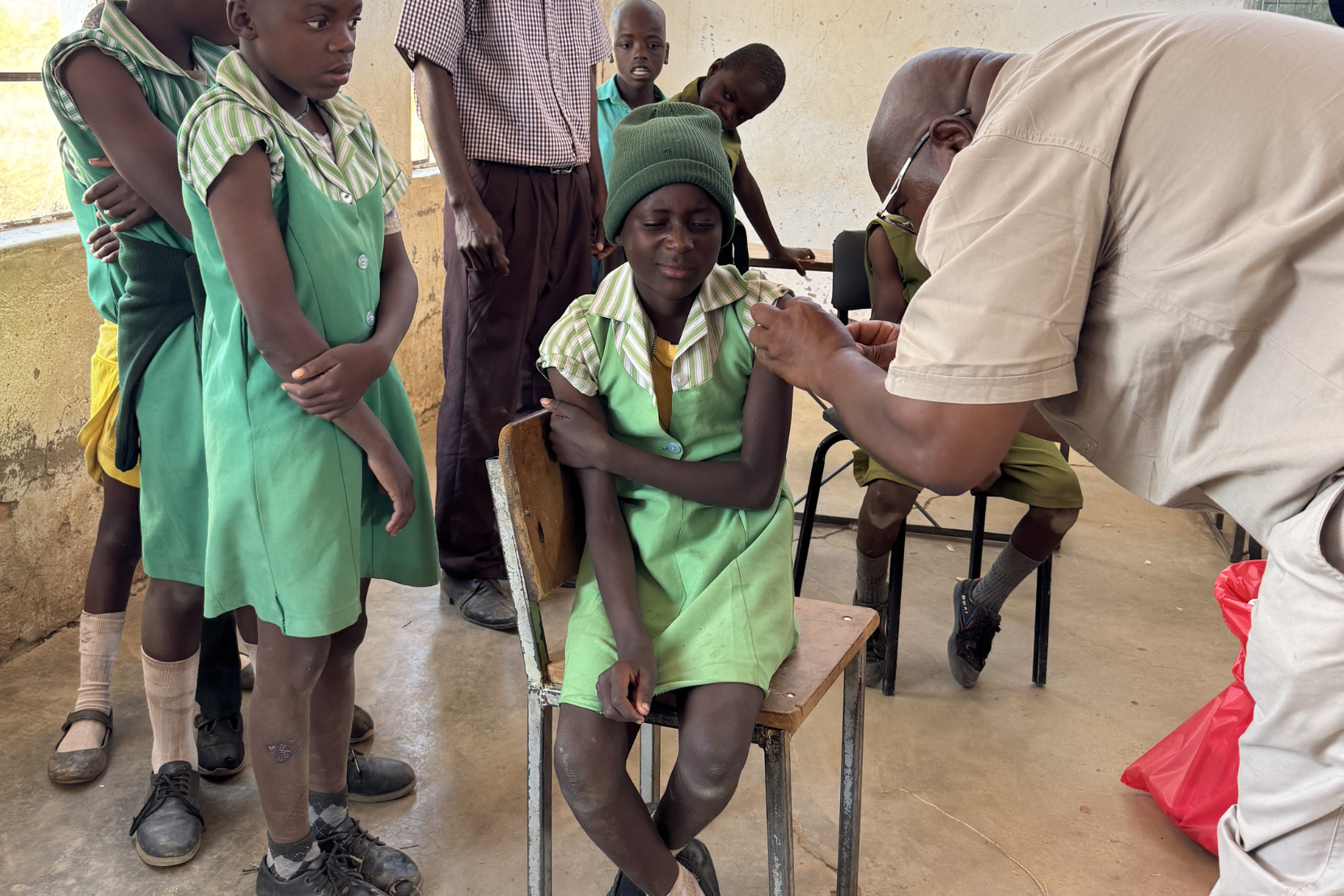
In rural Zimbabwe last year, I stood in a classroom that had been converted into a vaccination clinic. Girls queued for HPV and tetanus vaccines. The boys received tetanus only.
Cervical cancer remains one of the leading causes of cancer death for women in sub-Saharan Africa. Yet prevention is neither complex nor expensive. A series of injections, delivered at the right age, can dramatically reduce lifetime risk.
The difference between long-term health and long-term vulnerability can be that simple.
The gap between what is medically possible and what is actually available to women and girls remains stark. Climate change alone is projected to push an additional 158 million women and girls into poverty by 2050, nearly half of them in sub-Saharan Africa. When crops fail or water sources dry, it is women who walk further, work longer, and absorb the shock of scarcity first. The risks of a changing world are not distributed equally. They accumulate where inequality already exists.
Moments like the one in that Zimbabwean classroom make visible something the data confirms repeatedly: poverty is not gender-neutral. It compounds differently – and more heavily – for women and girls.
The Poverty Gap Has a Gender
One in every ten women globally lives in extreme poverty. At current rates, 351 million women and girls will still be trapped in extreme poverty in 2030 – the year the world set as its deadline for ending it.
Women earn less, own less, and carry more unpaid labor. Globally, women devote two and a half times as many hours per day to unpaid domestic and care work compared to men. They are more likely to be excluded from land ownership, formal employment, and access to finance. Lone-mother households face higher rates of poverty. Girls from the poorest families are the least likely to attend school and the most likely to be pushed into early marriage.
Women currently hold just 64 per cent of the legal rights afforded to men worldwide. At present rates of progress, closing these gaps will take generations.
This is not a story of isolated hardship. It is a story of systems – economic, legal and social – that compound disadvantages across a woman’s entire life.
Why Backing Women and Girls Compounds
What makes this more than a moral argument is that the evidence is unusually clear.
When women’s incomes rise, household nutrition improves. When girls complete secondary school, child mortality falls. When women control financial resources, spending patterns shift toward education and healthcare. When women participate meaningfully in governance and decision-making, policies are more responsive and outcomes more durable.
Few other areas of giving produce returns that compound across generations in this way.
Investing in women and girls is not a niche category of philanthropy. It is one of the most consistently evidence-backed ways to shift long-term development outcomes at scale.
Why This Moment Matters
This International Women’s Day, the global theme is Rights. Justice. Action. For ALL Women and Girls. The framing is deliberate. The gap between principle and practice remains wide.
At the same time, major public funding streams for gender equality are contracting. Significant reductions in USAID funding and weakened multilateral commitments to gender programs have left growing gaps in reproductive health, girls’ education and women’s economic empowerment. If progress is to continue, private philanthropy will increasingly be asked to step forward.
In April, more than 6,500 advocates, policymakers and activists will gather in Naarm – Melbourne – for the Women Deliver 2026 Conference under the theme Change Calls Us Here. The timing is significant. Gender equality commitments are under pressure globally. Development budgets are tightening.
Australia is among the wealthiest nations per capita in the world. Yet our philanthropic giving as a share of national income lags behind comparable economies. That gap is not only a statistic – it is an opportunity.
International Women’s Day offers visibility. But visibility without capital changes little.
Where Values Meet Action
The evidence on what works is clearer than it has ever been: direct cash transfers, girls’ education, maternal and reproductive health services, and women’s economic empowerment. These interventions are modest in cost relative to their impact. Delivered at scale, they alter life trajectories – and the economic futures of entire communities.
If poverty is not gender-neutral – and the data makes clear it is not – then our giving should not be either.
The Life You Can Save’s Women and Girls Cause Fund directs support toward a portfolio of rigorously vetted, high-impact organizations working to close these gaps – from girls’ education to maternal health to direct economic empowerment. For donors who want their giving to reflect both evidence and urgency, it offers a structured way to do so.
Explore the Women and Girls Cause Fund here.

