
Between November 25 and December 10, 2025, we traveled to Rwanda and Kenya to deepen our understanding of how our recommended charities create lasting change in people’s lives.
We met beneficiaries two years after they received support and we observed field staff delivering training. We visited six of our recommended charities across Rwanda’s Northern, Western, and Eastern provinces, and Kenya’s Nairobi and Kisumu.
Our goal was to observe the mechanisms behind the impact our recommended charities have: How do cash transfers translate into sustained improvements? What makes business training effective? How do agricultural programs create pathways out of subsistence farming?
Our Recommended Charities
Here’s what we learned.
GiveDirectly: How Cash Transfers Create Lasting Change
In northwestern Rwanda, we met five randomly selected beneficiaries who received GiveDirectly’s cash transfers at least two years earlier. We wanted to understand how the impacts develop over time and observe whether research-validated effects were visible in the field. We also wanted to give you better insights into what it actually means to live under $3 per day.
One man used his transfer to buy a cow. The dung fertilizes the small plot he rents for growing potatoes—something he couldn’t do before receiving the transfer. With the revenue he now affords health insurance for five family members (3,000 Rwandan Francs per person), pays for his children’s school materials, and improved his house by covering it with cement to prevent termites. His family now eats healthier meals.
Another man owned a small shop selling snacks and tea. With the transfer, he expanded his inventory to include potatoes, toothpaste, and other essentials. He also bought his own SIM card (before he rented someone else’s) to provide mobile money services. More people in the village now come to his shop and are able to afford goods.
Two years after receiving transfers, beneficiaries reported annual cash incomes of USD 500 to 600, alongside increased own-production for household consumption.
At a local health clinic, staff reported increased uptake of health insurance, higher levels of preventive and curative service use, and visible reductions in malnutrition cases. A local government official reported that the district had moved from among the lowest-performing sectors nationally to within the top five over two years, across indicators including stunting, school dropout rates, and health insurance coverage.
The government’s own social protection program had entered the district around the same time, making direct attribution complex. But the pattern we observed was clear: cash transfers function as a catalyst, accelerating people’s capacity to engage with public services.
One Acre Fund: How Market Access Amplifies Agricultural Income
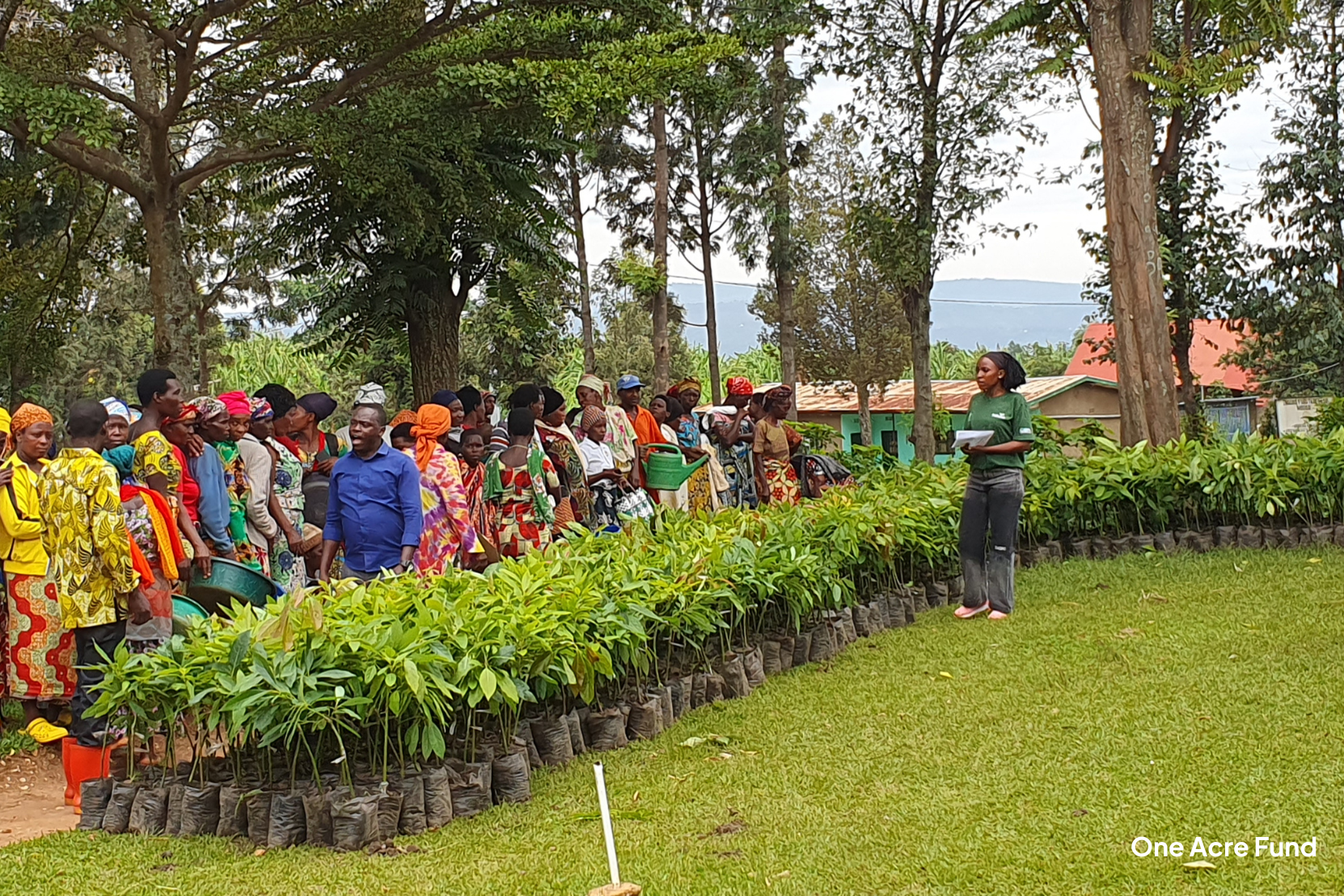
When farmers operate on very small landholdings (often just one acre used for subsistence), even significant productivity gains may not be sufficient to lift them out of poverty. Our visit focused on understanding One Acre Fund’s new market access component and how it amplifies income beyond productivity improvements alone.
We observed training on soil health, tree planting, and land degradation prevention. Beneficiaries reported being able to eat healthier meals. One Acre Fund’s program first helps improve nutrition through diverse production (still subsistence farming but healthier diet), then expands production to generate revenue, and third through market access helps increase farmers’ income.
We visited an avocado oil processing factory, operated as a joint venture with an impact investing group. The factory acts as a structured buyer for high-quality avocados from program farmers, with One Acre Fund acting as a mediator. Farmers receive quality feedback, agronomic guidance, and higher prices than local markets offer. This market access strategy reorients farmers toward participation in higher-value commercial markets.
Village Enterprise: Understanding What Drives Graduation from Extreme Poverty
Village Enterprise trains poor households to form three-member business groups, offering seed capital, business mentorship, and ongoing support. We visited four groups that completed the program in 2023 or 2024 to understand which mechanisms—skills training, mentorship, or savings groups—drive their success.
The consistency was remarkable. Every group independently cited the same factors: the training was valuable, but the business mentors were what made it work. The most impactful elements were income diversification, record-keeping, and the three-member structure.
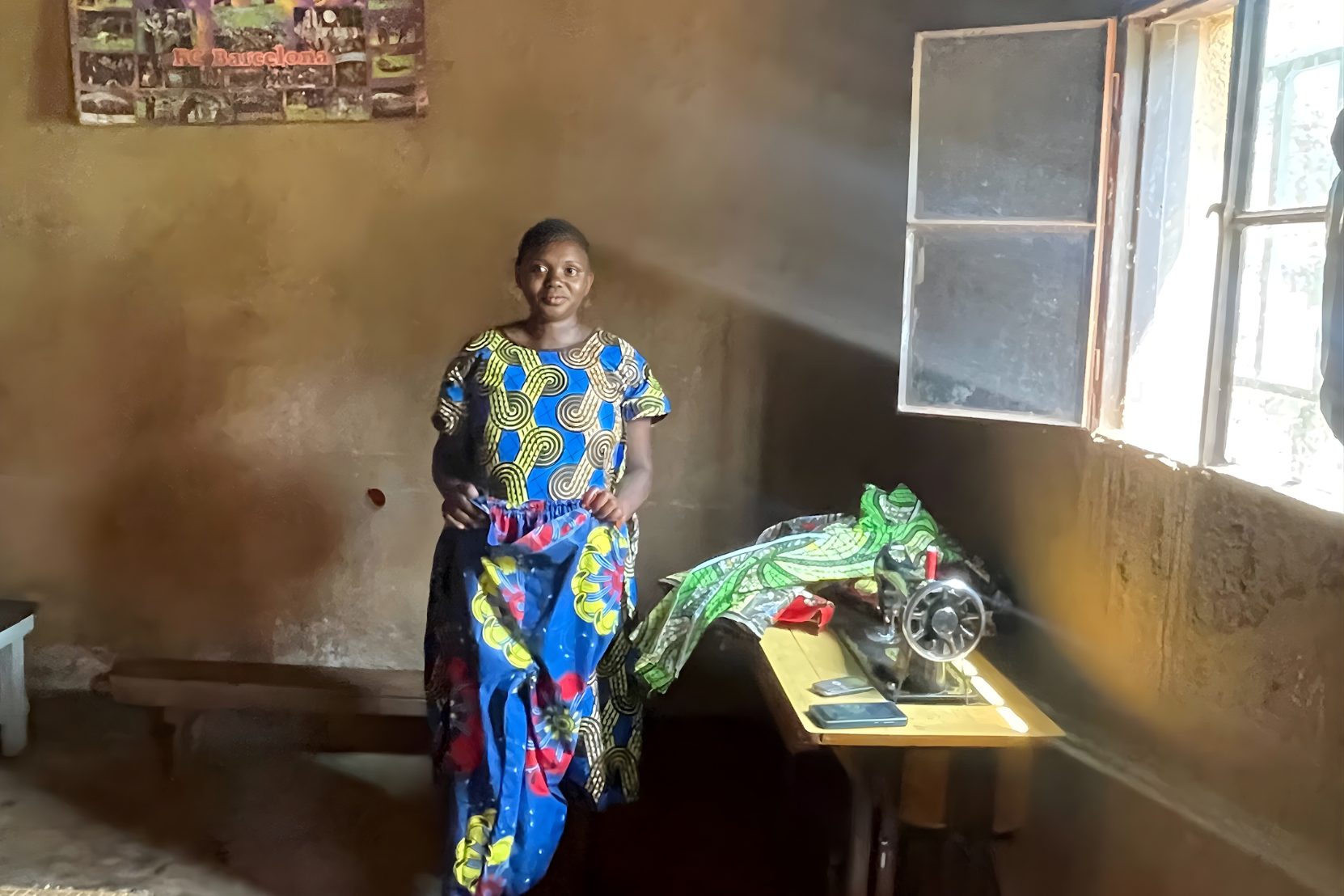
One group started selling eggs after buying chickens with startup capital. This evolved to renting land to grow cabbage, then establishing their own shop selling produce and other goods. They bought two sewing machines with revenue from the chickens to make clothes. They also have pigs they sell.
A three-woman business group revealed an important insight. All members independently mentioned their inability to afford school fees and health insurance before the program. Their narrative focused less on “more money” and more on predictability and control. We observed how the program shifts households from fragile, reactive financial behavior toward planned economic lives. The psychological shift toward agency appeared as significant as the income effects.
We also visited a group composed of two women and an elderly man. The beneficiary reported he would have never imagined being able to have financial stability at his old age and be able to take care of his wife and son who has special educational needs. The strength of the business group was the skill complementarity each member brought.
One savings group that initially had 30 members had expanded to 45 members, including people who didn’t participate in Village Enterprise’s program. They now loan money to individuals outside the program, allowing them to have capital they wouldn’t otherwise have. The savings group is acting as an amplifier within their community.
Sanku: Making Fortification Scalable
In Kenya, we met with Sanku’s data analytics team. The team presented their data pipeline, dashboards, and reporting systems, highlighting improvements in data quality and operational performance tracking.
There was clear emphasis on identifying cost efficiencies in premix production and distribution. The team is planning to establish a dedicated research function in 2026 to address gaps in impact evaluation.
We toured the warehouse and met the technical team. They showcased an improved dosifier designed to increase miller fortification capacity, and a new smaller-scale dosifier aimed at reducing costs for small mills in Tanzania.
We visited a miller on the outskirts of Nairobi. Seeing the dosifier integrated seamlessly into milling and packaging operations, provided concrete evidence that operational efficiency gains are likely to translate into scalable, cost-effective fortification.
Living Goods: How Technical Assistance Strengthens Government Healthcare
In Kenya, we also examined Living Goods’ government partnership model and assessed implementation quality when relying on government community health workers. The Kenyan government has partnered with Living Goods since 2023, co-funding community health activities. The government provides the workforce, mandate, and stipend financing. Living Goods provides digitization, technical support, and supervision systems.
Community health workers operated with paper-based registers, resulting in poor data quality and limited use of data for planning. Digitization enabled routine, high-quality data capture and near-real-time decision-making. The government now uses this data to model budgets, plan procurement, and monitor health performance.
We shadowed a community health worker for two hours. The delivery was exceptionally strong: high-quality primary care screenings, accurate digital data entry, and respectful, dignified interactions. The delivery quality matched (and in some cases exceeded) what we observed back in 2023 in Uganda’s direct-delivery model.
Teaching at the Right Level Africa: Education at Scale
In Kenya, we also met with Teaching at the Right Level Africa’s Executive Director and Director of Research and Evaluation to understand how TaRL measures learning outcomes and ensures quality when working within government systems.
TaRL embeds evidence-based learning acceleration programs within national systems (Côte d’Ivoire, Nigeria, Zambia). While this may reduce short-term effectiveness relative to controlled pilots, it enables long-term sustainability, scalability and policy adoption.
TaRL engages across multiple levels: teachers and classrooms, technical experts and civil servants, and politicians. By demonstrating effectiveness at operational levels, the approach gains internal champions who sustain the program despite changes in political mandates.
By systematically embedding itself at operational and bureaucratic levels, the organization creates internal pressures for sustainability, independent of political cycles. This provides a replicable model for other government-partnership interventions.
These site visits reinforced why these six organizations remain among our recommended charities for donors seeking maximum impact.
What This Means for Your Giving
Our field observations illustrate how evidence-based organizations translate research into practice. Beneficiary stories align with research findings. Monitoring data reflects field realities. Through these site visits we corroborated that the organizations that we recommend uphold beneficiary dignity, maintain strong data systems, and create lasting change through well-designed programs.
When you give through The Life You Can Save, you’re supporting recommended charities that we have evaluated through a mix of desk research and direct observation. Your donation creates a measurable, lasting impact: cash transfers that help families afford health insurance and education, business training that creates sustainable livelihoods, agricultural support that opens paths to commercial markets.