Luminos Fund addresses one of the most pervasive but solvable crises in global development: learning poverty. Learning poverty affects a staggering 90% of children in sub-Saharan Africa, encompassing both children who are completely out of school and those who attend school but fail to learn foundational skills. Founded in 2016 by Caitlin Baron, Luminos designs and delivers structured pedagogy programs that grant marginalized and out-of-school children a second chance at foundational literacy and numeracy.
The core of their intervention, the Luminos Method, combines phonics-based, contextually adapted learning materials and joyful classrooms with rigorous teacher training, classroom coaching, and robust monitoring of student outcomes. Luminos delivers its programming via two channels: a direct delivery model and a highly scalable government implementation model, where Luminos collaborates with ministries of education to embed its curriculum directly into public education systems. The government implementation model is central to Luminos’ strategic ambition to reach 500,000 children per year by 2029, focusing heavily on scaling in sub-Saharan Africa.
Their demonstrated impact includes:
Learners Directly Impacted: Successfully reached 103,523 students across marginalized communities during the 2025-26 academic year.
Total Reach: Surpassed a cumulative reach of 481,149 children since the organization’s inception.
Educators Empowered: Formally trained and upskilled 16,143 teachers in evidence-based, structured pedagogy methods across international sites.
International Footprint: Successfully operates and monitors intensive educational programs across Ethiopia, Ghana, Lebanon, and Liberia.
Proven Learning Outcomes: Demonstrated persistent long-term gains, with rigorous external evaluations verifying that program graduates are twice as likely to complete primary school six years after exiting the program.
Foundational Literacy and Numeracy Attainment, Primary School Completion Rates
Recent Expense Budget
$15 Million (FY 2026)
Year Founded
2016
The Problem — Learning Poverty in Sub-Saharan Africa
Learning poverty marks a severe global crisis wherein a large proportion of children are denied the opportunity to master basic, foundational skills. Officially quantified by the World Bank, learning poverty is the percentage of 10-year-old children who cannot read or comprehend a simple text.
This crisis encompasses a dual failure: children who are locked out of the school system entirely, and the large cohort who attend school daily but, through no fault of their own, are not given the proper tools and accompaniment in the classroom to learn. In the world’s poorest nations, an estimated 90% of children are unable to read with comprehension by the end of primary school.
The root drivers include overly ambitious national curricula that fail to match students’ actual baseline learning levels, combined with teachers who are structurally isolated, under-trained, and lack structured pedagogical support. This crisis worsened drastically post-COVID-19; global learning poverty in low- and middle-income nations spiked from 57% in 2019 to an average of 70% by 2022.
Failing to secure foundational skills in early grades undermines all subsequent educational milestones – one cannot read to learn if they have not yet learned to read – carrying devastating long-term consequences for individual livelihoods and national development. Children left behind in early reading and basic math are disproportionately more likely to drop out, remain trapped in multi-generational poverty, and face severely restricted life opportunities, further widening societal inequalities for rural and marginalized households.
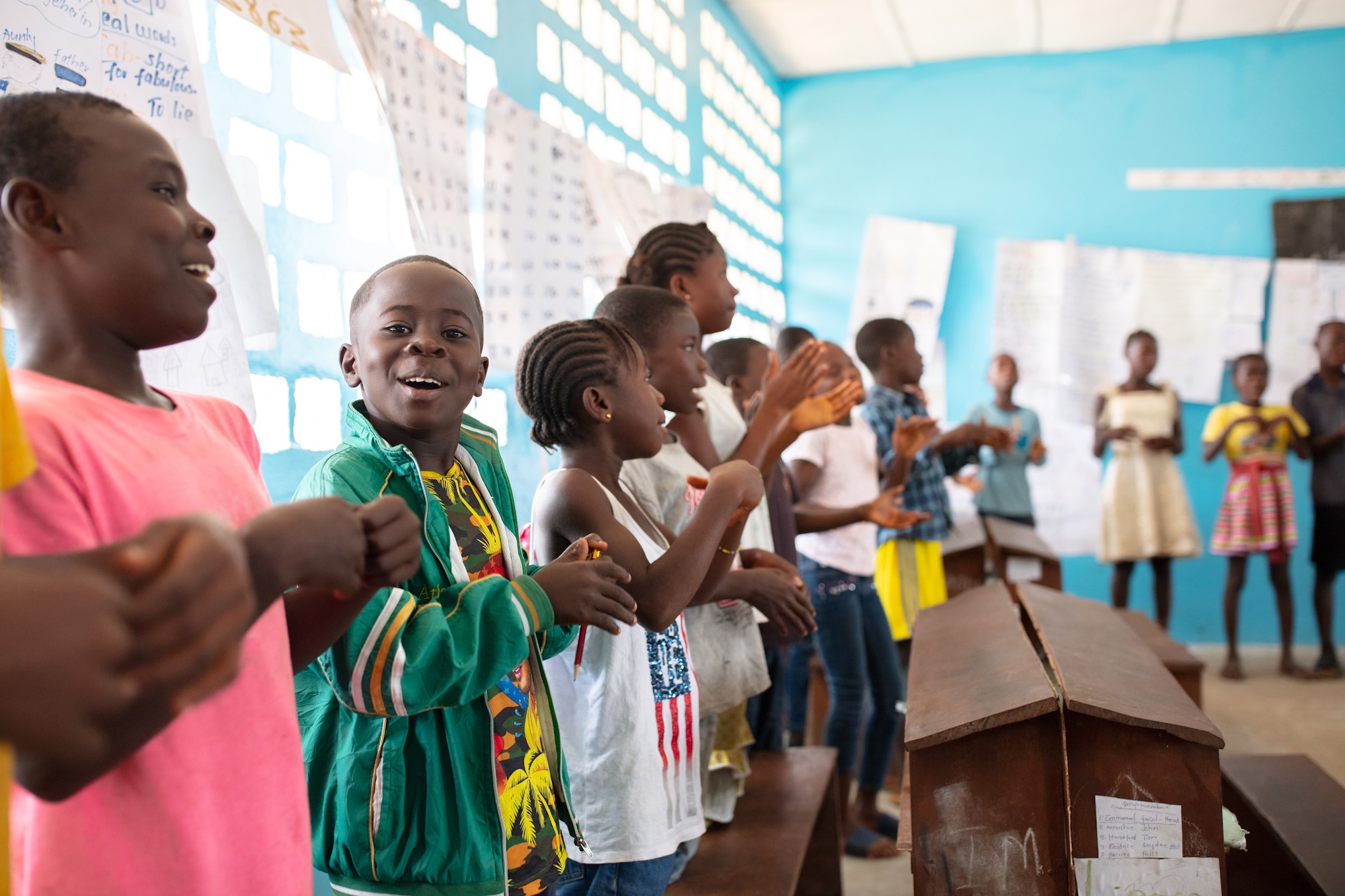
In Liberia, Luminos student Abraham practices spelling the week’s vocabulary words, chanting along with his classmates. (Photo by Mara Chan/Luminos Fund)
The Solution: The Luminos Method
The Luminos Method is a structured pedagogy intervention specifically designed to solve learning poverty in low-resource and crisis-affected environments. The Global Education Evidence Advisory Panel (GEEAP) explicitly classifies structured pedagogy and differentiated learning as global “Smart Buys”, the most cost-effective, evidence-based interventions to drive global learning gains.
The Luminos Method acts as a comprehensive, specialized educational ecosystem that includes:
Phonics-Based, Contextual Curricula: High-quality, cutting-edge learning materials designed from the science of learning, aligned with local languages and state curricula.
Joyful Learning: Engaging and meaningful lessons make learning joyful, resulting in better outcomes and equipping students with a life-long love of education.
Intensive Teacher Professionalization: Recruiting educators locally and providing continuous, repeated, and individualized training coupled with weekly classroom coaching.
Continuous Formative Assessments: Utilizing brief, adaptive testing to ensure instruction constantly flexes to meet the exact evolving needs of each student.
Multi-Channel Delivery: Combining direct delivery to refine operational excellence with a high-leverage government adoption framework to scale impacts across public school systems.
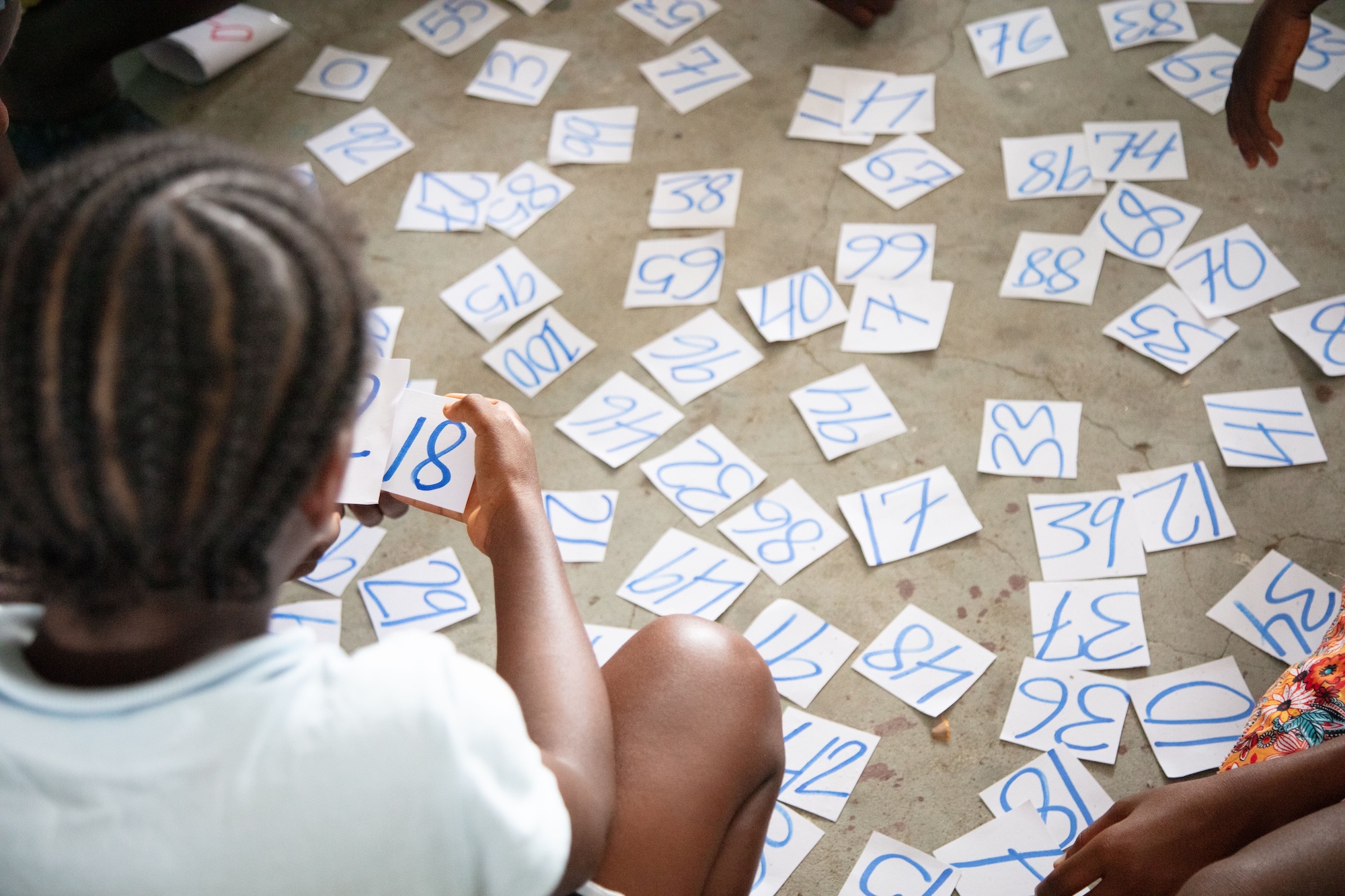
Luminos students practice math by playing a flashcard game in which they identify two numbers that that equal a given sum. (Photo by Mara Chan/Luminos Fund)
How Luminos works
Step 1: Community Embedding and Classroom Setup.
Luminos establishes classrooms directly within marginalized or crisis-affected communities where the need is greatest and is welcomed by local leadership. Teachers are deliberately recruited directly from within these immediate communities and trained in effective pedagogy. They are also provided with high quality Luminos-authored learning materials and coaching sessions (all Luminos materials are open access).
Step 2: Structured pedagogy program. Rather than standard rote memorization, instruction is interactive and joyful, phonics-based, and performance-tracked. Program supervisors conduct regular classroom observations and real-time student learning assessments to guide remedial, formative feedback loops.
Step 3: Strategic Government Co-Development and System Integration.
To drive systemic, long-term change, Luminos works side-by-side with national ministries of education. In Ghana, Luminos teams up with the Complementary Education Agency and the National Agency for Curriculum and Assessment to co-develop and approve structured pedagogy materials for the government-run Complementary Basic Education Program. In Ethiopia, they co-chair the National Accelerated Education Working Group, directly transitioning their accelerated “Second Chance” framework into the broader state apparatus.
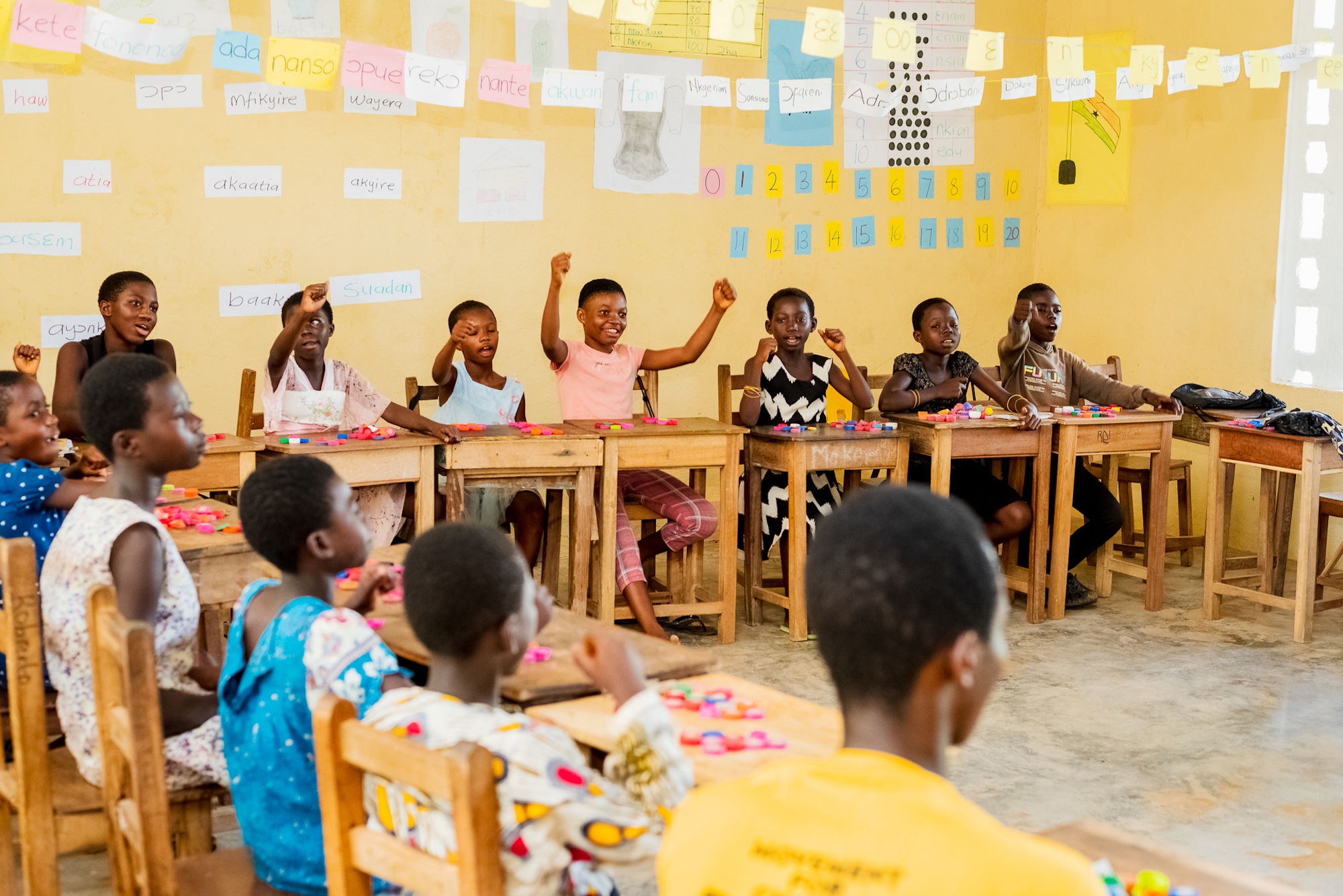
Students in Ghana participate in an interactive math lesson using local materials. (Photo by Obeng Baah for the Luminos Fund)
481,149
Total Learners Reached Since Inception
8 to 11 Learning-Adjusted Years of Schooling (LAYS)
Delivered per $100 Under Government Adoption Model
4x Faster
Reading Fluency Demonstrated vs. Control Peers in Liberia’s Randomized Controlled Trials (RCT)
2x Higher
Probability of Full Primary School Completion for Program Graduates
Other ways to donate
We recommend that gifts up to $1,000 be made online by credit card. If you are giving more than $1,000, please consider one of these alternatives.
What can you help Luminos achieve? Enter a donation amount below to find out.
USD
What makes Luminos so effective
Globally Validated, Experimental Results
A clustered randomized controlled trial (RCT) conducted by IDinsight in Liberia revealed that after 10 months, Luminos students read over four times as many words per minute and solved twice as many math problems as their control group peers, yielding massive effect sizes ranging from 0.5 to 2.1 standard deviations. Furthermore, follow-up RCT data confirmed these learning gains completely persisted a year later, alongside a 15 percentage point increase in subsequent formal school enrollment.
Compounding Impact
Luminos’ impact expands far beyond the immediate classroom, generating large downstream returns across multiple facets of human capital. A landmark longitudinal study in Ethiopia tracked program graduates over six years, revealing that Luminos alumni were twice as likely to complete primary school (56% vs. 31% for matched peers), maintained significantly higher academic performance by a margin of 10%, and harbored vastly superior long-term educational aspirations.
Restoring Beneficiary Dignity & Local Capacity
Dignity, agency, and local leadership are systematically embedded across Luminos’ global operations. The organization rejects paternalistic narratives, ensuring that its external communications and internal monitoring and evaluation frameworks accurately celebrate learners as active, joyful agents in their own development. Beneficiary feedback loops are institutionalized via monthly parent groups and qualitative student outreach.
Recognition for Luminos
Luminos is the winner of the 2022 Klaus J. Jacobs Best Practice Prize, the 2021 Library of Congress International Literacy Prize, the 2021 Barry & Marie Lipman Family Prize, 2017 World Innovation Summit for Education (WISE) Award, and is a member of the hundrED Hall of Fame. The organization is consistently top-rated by Charity Navigator and has a Platinum Seal of Transparency from Candid.
SourcesExpand ListCollapse List
Global Education Evidence Advisory Panel. (2020, October). Cost-effective approaches to improve global learning: What does recent evidence tell us are “smart buys” for improving learning in low- and middle-income countries? World Bank.
Luminos Fund. (2024). Government adoption with structured pedagogy in Ethiopia: 2023-24 summary of independent endline evaluation report.
McManus, J., Rudasingwa, M., Nijhof, E., Mokobi, K., Deme, S. F., Kiawoin, J., Acero, F., Mwai, L., & Pignon, C. (2024). Improving learning outcomes for out-of-school children: Evidence from a randomized evaluation of an accelerated learning program in Liberia. Education Economics, 33(1), 19–38.
Mokobi, K., Kumar, M., Rudasingwa, M., & McManus, J. (2024). Luminos program impact evaluation: Longitudinal outcomes from a randomized controlled trial of accelerated learning for out-of-school children in Liberia. IDinsight.

 Australia site →
 Global tax-deductible giving →