
• Sign up
 
Sign in
  
The Life You Can Save - Effective giving against world poverty
  • Where to Donate
    • -Where to Donate
    • -Top Charities
      • --Top Charities
      • --Against Malaria Foundation
      • --Development Media International
      • --Evidence Action
      • --Fistula Foundation
      • --Fred Hollows Foundation
      • --GiveDirectly
      • --Global Alliance for Improved Nutrition
      • --Innovations for Poverty Action
      • --Iodine Global Network
      • --Living Goods
      • --One Acre Fund
      • --Oxfam
      • --Population Services International
      • --Possible
      • --Project Healthy Children
      • --Schistosomiasis Control Initiative
      • --Seva
    • -Impact Calculator
    • -Selection Methodology
    • -Tax Deductions
  • Causes We Support
    • -Children
    • -Women & Girls
    • -Health & Infectious Diseases
    • -Hunger & Nutrition
    • -Water & Sanitation
    • -Education
    • -Agriculture
    • -Empowerment & Opportunity
    • -Research
  • Take the Pledge
    • -Take the Pledge
    • -Pledge FAQs
    • -Supporter Stories
  • Learn More
    • -Learn More
    • -What is Extreme Poverty?
    • -Why Donate?
    • -Why Give Internationally
    • -What Makes a Charity Effective?
    • -Where Our Charities Operate
    • -Get Involved
      • --The Life You Can Save Groups
      • --Effective Altruism Groups
      • --Connect With Us
      • --Share Your Story
      • --Donate Your Birthday or Holiday
      • --Resources
    • -Common Objections to Giving
    • -Continuing Education
    • -Extreme Poverty Report
  • Media
    • -Blog
    • -Charity Voices
    • -Charlie's Short Takes
    • -Newsletter
    • -Podcasts
    • -Videos
    • -Interactive Quiz
    • -In the News
    • -Endorsements
  • Giving Games
    • -Giving Games
    • -What is a Giving Game
    • -Why is Philanthropy Education Needed
    • -Resources
      • --Instruction Manual
    • -FAQ
    • -Tips
    • -Support the Giving Games Project
  • About Us
    • -About Us
    • -What We Do
    • -People
      • --Peter Singer
      • --Team
    • -Books
    • -Impact Report
    • -Support Our Work
    • -FAQ
    • -Contact Us
Support Us
Make a Difference Today Donate to GiveDirectly
Download as PDF
Make a Difference Today Donate to GiveDirectly

GiveDirectly

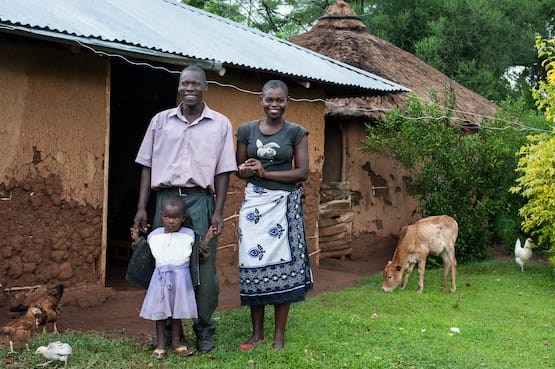
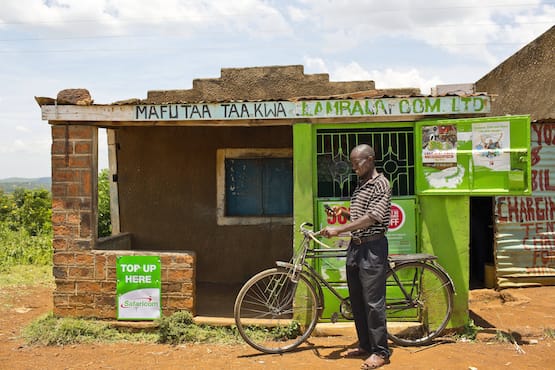
GiveDirectly provides unconditional cash transfers using cell phone technology to some of the poorest people in Kenya and Uganda. These direct cash transfers allow families to buy much-needed food and shelter, educate their children, and start small businesses.

GiveDirectly uses national data and door-to-door surveys to seek out the poorest households to receive transfers. Households are selected using criteria that vary by region -- including a range of factors like housing materials, assets, vulnerable recipient status, and other criteria. Selected households are provided with SIM cards if they do not have one. GiveDirectly then transfers $1,000 to the family in installments over several months using a mobile payment system, and the recipients are free to use the money however they need to. In 2015, GiveDirectly committed $13.7 million to recipient families.

The Problem

Traditional methods of international giving are complex--and often inefficient. Often, donors give money to a charity, which passes along the funds to partners at the local level. This makes it difficult for donors to determine how their money will be used and whether it will reach its intended recipients.

The Solution

Unconditional Cash Transfers. Most poverty relief initiatives require complicated infrastructure, and alleviate the symptoms of poverty rather than striking at the source. By contrast, unconditional cash transfers are straightforward, providing funds to some of the poorest people in the world so that they can buy essentials and set themselves up for the future. Numerous studies have shown that this approach changes lives for the better.

Why GiveDirectly is different from other charities

GiveDirectly seeks to change the questions donors ask about international giving, and the way they think about effective charity. The non-profit uses a rigorous, data-driven model to identify potential cash transfer recipients and monitor the outcome of the transfer. GiveDirectly oversees the entire transfer process from end-to-end--without a middleman or partner charity--and uses cell phone technology for monitoring and payment.

Cash transfers are relatively well-studied and the research is uniformly positive. Several studies have found that cash transfers improve child health and schooling, while savings and investment rates are typically high. Targeting the extreme poor—recipients living on $0.65 a day on average—means that GiveDirectly can dramatically affect livelihood. The organization is committed to transparently tracking and improving their effectiveness through randomized controlled trials of their work (the “gold standard” in social sciences research). The team has strong experience in international development, economics, policy analysis and program evaluation, in both the non-profit and for-profit sectors. GiveDirectly’s model is also built to be scalable if funds are available.

Support GiveDirectly’s work!
Direct cash transfers are proven to give the global poor a chance to build a better future. Donate Now!

Why GiveDirectly is effective

Cost-efficient

By cutting out middlemen and complex infrastructure, GiveDirectly is able to transfer 91 percent of received donations to families through its Kenya-based programs. For its Uganda-based programs, that number is 85 percent of donations.

Rigorous monitoring

GiveDirectly is committed to randomized controlled trials, collaborating with independent researchers to evaluate their programs. They participated in a large-scale trial in Kenya conducted by the Innovations for Poverty Action.

Designed for scale

GiveDirectly’s cash transfer model is designed for scaling. More donations means that more recipients will receive life-changing cash transfers.

Proven results

Numerous high quality studies across Africa, Asia and Latin America have found that cash transfers improve child health and education, and that family income rises and remains high. The Kenya trial found that earnings went up by 34%, assets increased by 52% and children went without food on 42% fewer days.

High Impact

Calculate!


Share with friends!

GiveDirectly’s accountability and sustainability

GiveDirectly is a recommended charity of The Life You Can Save. In addition, GiveWell has praised GiveDirectly for its transparency, including providing all documents requested and making its annual reports available on its website. GiveDirectly also took the unusual step of making details of the Kenya trial publicly available before data was collected, ensuring that it had no opportunities to bury bad news. In 2012, GiveDirectly received a Global Impact Award from Google.org.

Many transfer recipients invest some of the money to start small businesses, ensuring that they receive an increased income in the years to come. By providing a means to better nutrition, clothing, health and education, cash transfers give families, and children in particular, a chance to escape the cycle of extreme poverty and make better lives for themselves.

Frequently Asked Questions

  • How will recipients use my donation?
  • Will my donation be misused to buy alcohol, tobacco, or other “temptation goods”?
  • What about corruption?
  • Don't recipients’ neighbors get jealous?
  • Why doesn't GiveDirectly make micro-loans or make transfers conditional?
  • Is my donation tax-deductible?

How will recipients use my donation?

Recipients are free to use the funds as they see best fitting for their families' needs. Many purchase livestock or iron roofs for their homes, or use the money to pay for food, health care, their children's education, or to start small businesses.

Will my donation be misused to buy alcohol, tobacco, or other “temptation goods”?

While some donors believe that the poor systematically abuse cash transfers, studies show that this is not the case. Most studies find either no increase in spending on “temptation goods” or at most an increase proportional to the increase in other household spending. Moreover, studies have demonstrated the cash transfers do not decrease the number of hours recipients work--and often have the effect of increasing productive work hours.

What about corruption?

GiveDirectly has rigorous auditing processes, which have uncovered ineligible households in 3 percent of cases and bribe requests in 0 percent of cases.

Don't recipients’ neighbors get jealous?

When asked, only 5 percent of recipient households reported arguments within their communities, and only 1 percent reported violence or crime as a result of the transfers.

Why doesn't GiveDirectly make micro-loans or make transfers conditional?

The evidence for the positive impact of cash transfers is far stronger than the evidence for micro-loans, which have to be paid back. If conditions are imposed on transfers, then compliance has to be monitored, greatly increasing the costs of the program.

Is my donation tax-deductible?

GiveDirectly has 501(c)(3) status in the United States. UK donors can make tax-deductible donations via the Giving What We Can Trust, which are eligible for Gift Aid. Canadian donors giving over $5,000 can make tax-deductible donations via GiveWell, subject to a 10 percent deduction for costs incurred by Tides Canada. Australian donors can make tax-deductible donations via Effective Altruism Australia.

More Information

Resources

  • GiveDirectly’s website
  • GiveDirectly’s annual reports
  • GiveWell’s review of GiveDirectly

About Us

The Life You Can Save is a movement of people fighting extreme poverty. We hold that an ethical life involves using some of our wealth and resources to save and improve the lives of those less fortunate than us.

Read more

Support Our Work

Recommended Charities

  • Against Malaria Foundation
  • Development Media International
  • Evidence Action
  • Fistula Foundation
  • Fred Hollows Foundation
  • GiveDirectly
  • Global Alliance for Improved Nutrition
  • Innovations for Poverty Action
  • Iodine Global Network
  • Living Goods
  • One Acre Fund
  • Oxfam
  • Population Services International
  • Possible
  • Project Healthy Children
  • Schistosomiasis Control Initiative
  • Seva

What's the most effective way to fight extreme poverty?

Stay informed with periodic updates.
Copyright 2016 by Peter Singer : Terms of Use : Privacy Policy